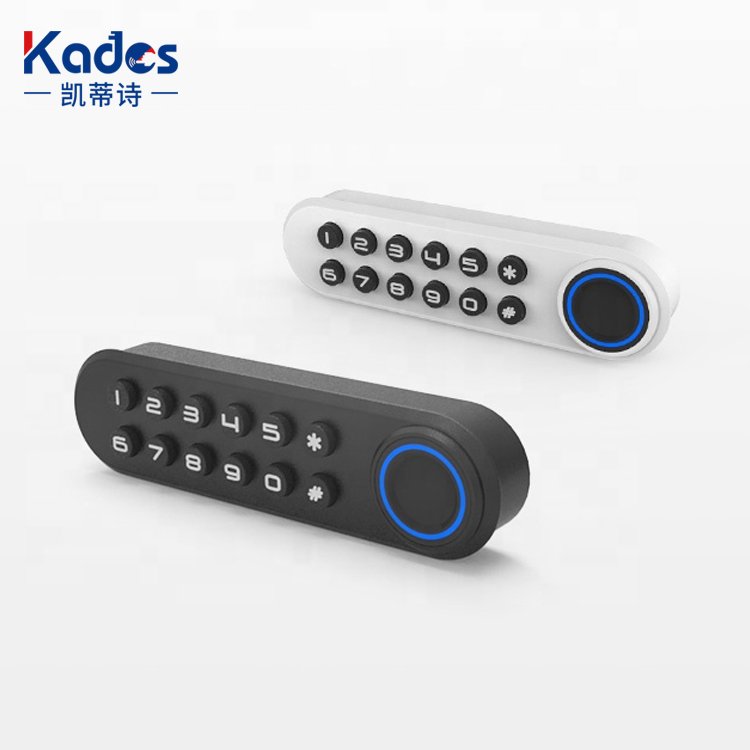
smart furniture lock vs ordinary mechanical locks

1: Unlocking method and convenience:
Smart furniture locks use biometric recognition, with fingerprint unlocking being a common method. Key free, fingerprint quick unlock to prevent forgetting or losing, some support apps/passwords, while traditional mechanical locks use physical metal keys that need to be carried with you
2: Permission management:
The smart furniture lock can input multiple sets of fingerprints (such as 10-20 sets), which can be added or deleted at any time. Mechanical locks require copying physical keys and cannot accurately delete single user permissions
3: Usage record:
Some smart furniture locks have Bluetooth or Wi-Fi functions, and unlocking records can be viewed on the app. Traditional mechanical locks cannot view unlocking records
4: Electricity demand:
Smart furniture locks require electricity to operate, commonly AAA batteries or non removable lithium batteries that require regular charging/battery replacement. If your drawer is frequently used, I recommend using smart furniture locks because there is a high probability that you will encounter low battery notifications. If it is a drawer that will not be opened for a long time, traditional mechanical locks can be retained. The drawers that have not been in contact for a long time are equipped with smart locks, and you may miss the low battery warning. When you want to open them, emergency charging is required. In this field, traditional mechanical furniture locks can be easily inserted and opened, giving them an absolute advantage.
The most important thing is safety: under the premise of qualified and legitimate products, the reopening rate (mistake rate) of smart locks is significantly lower than that of traditional mid to low order mechanical locks. In addition, the smart lock has a mechanism of “locking and alerting after multiple input errors”, which is superior to traditional mechanical locks in preventing physical trial and error unlocking. Some extremely cheap bulk office cabinet locks have a reopening rate as high as 1/200, often resulting in the situation of “trying to open the adjacent cabinet with the same brand key”. If you need to install mechanical locks, please consult the store for the reopening rate of the lock cylinder and key. The lower the reopening rate, the better.